Intro
What’s the real price of that $10 tee or $20 dress? While fast fashion promises low-cost style, the planet is footing the bill: smog-filled skies, polluted rivers, overflowing landfills—and a fashion future at risk. Let’s dive into how pollution defines fast fashion’s dark footprint.
1. Fast Fashion by the Numbers
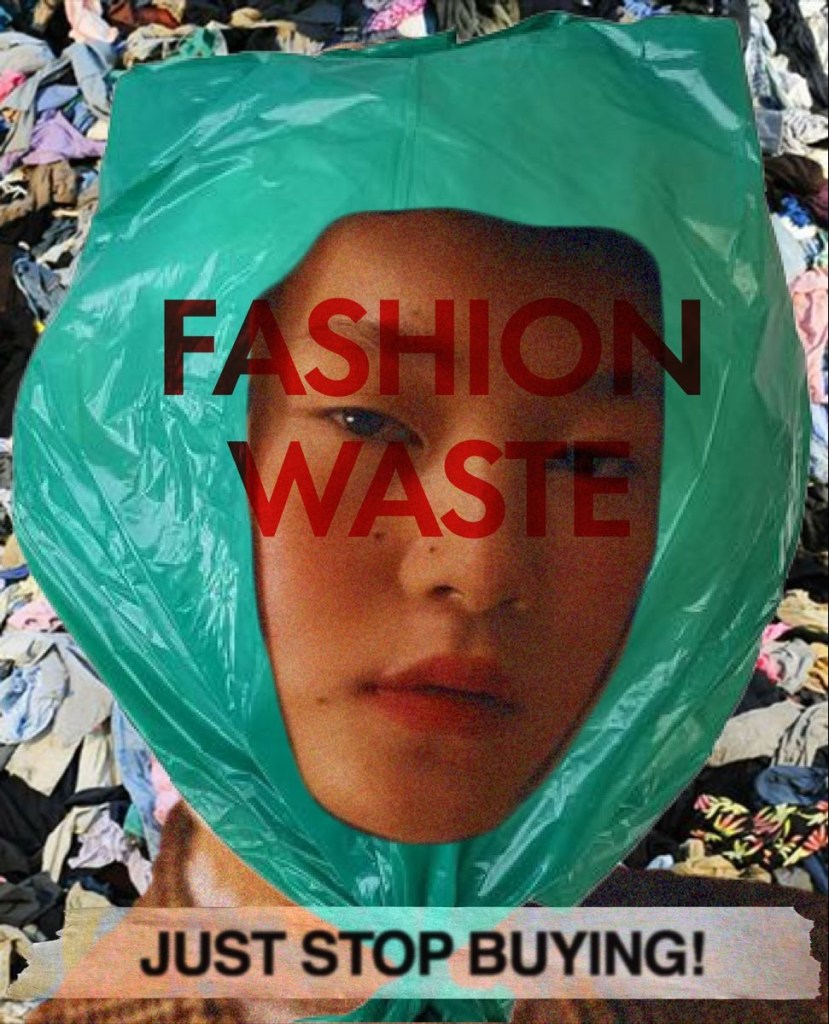
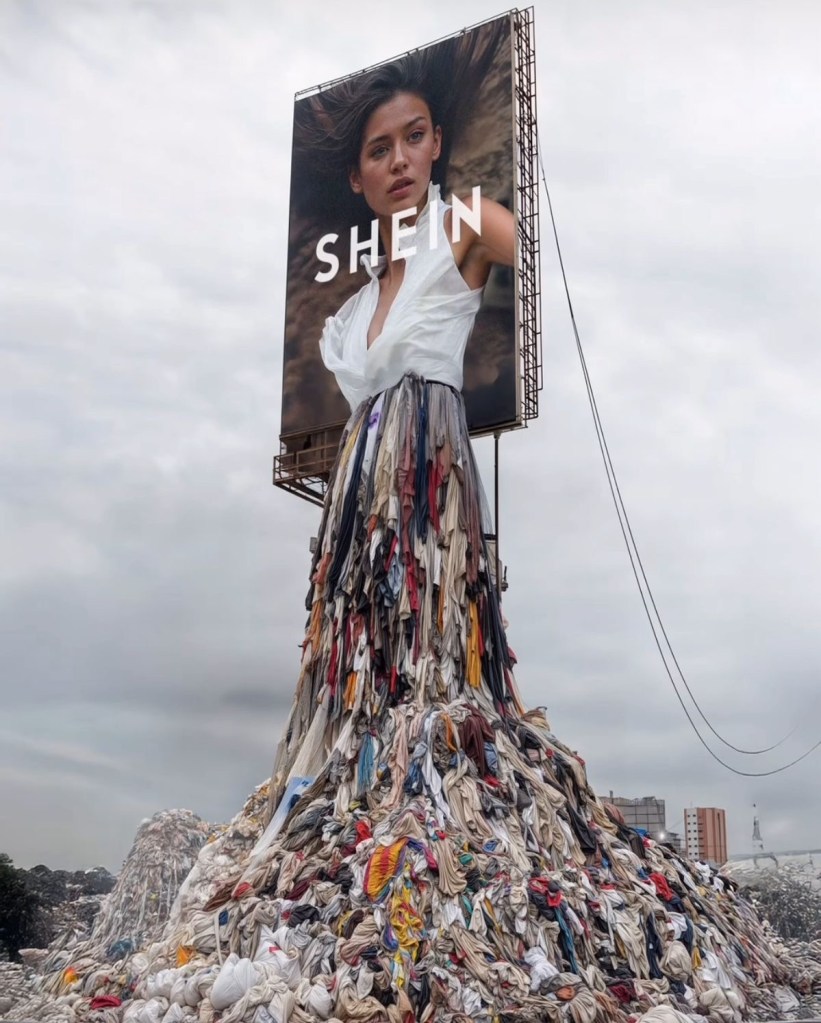
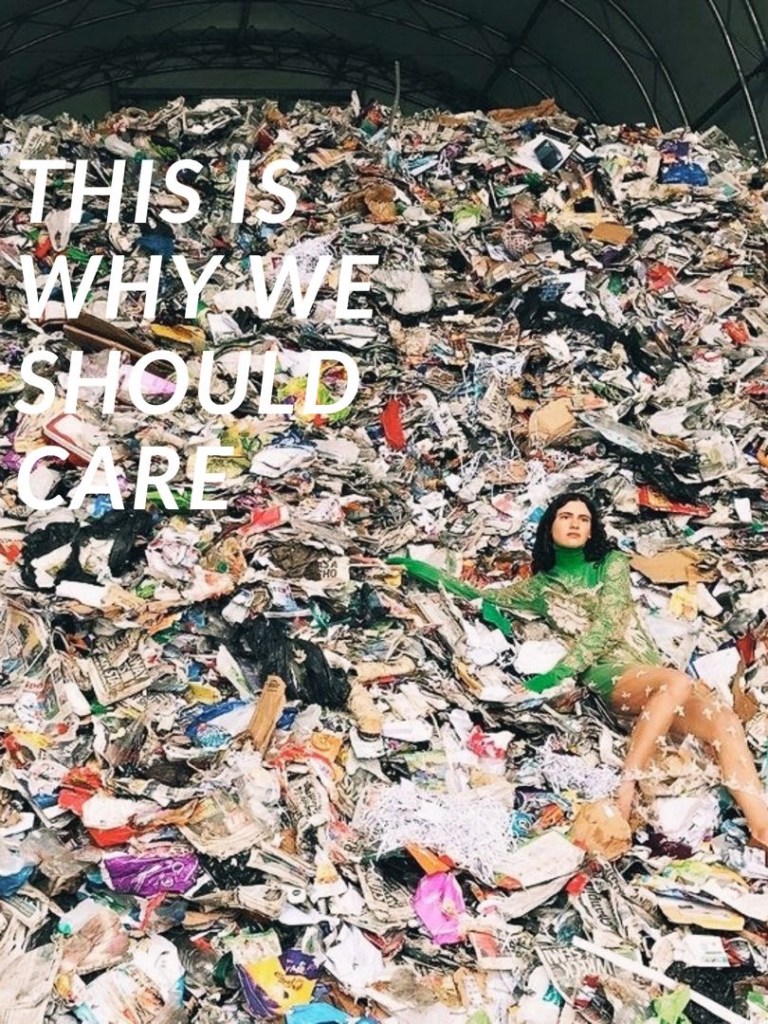
- 100 billion garments are produced globally each year—but a shocking 92 million tonnes of textile waste ends up in landfills annually. That’s the equivalent of a trash truck full of clothes dumped every single second .
- In the US alone, about 11.3 million tonnes of textile waste are sent to landfills annually—81.5 lbs per person .
2. Pollution Starts in the Factory
Carbon Footprint
- The fashion industry contributes approximately 10% of global carbon emissions—greater than international flights and shipping combined .
- Emissions are projected to rise 50% by 2030 if trends continue unchecked .
Water Use & Waste
- Producing a single cotton shirt requires about 700 gallons (≈2,600 L) of water; a pair of jeans needs around 2,000 gallons (≈7,600–10,000 L) .
- The industry consumes roughly 93 billion m³ (≈20 trillion gallons) of water annually and generates 20% of global industrial wastewater .
Toxic Runoff
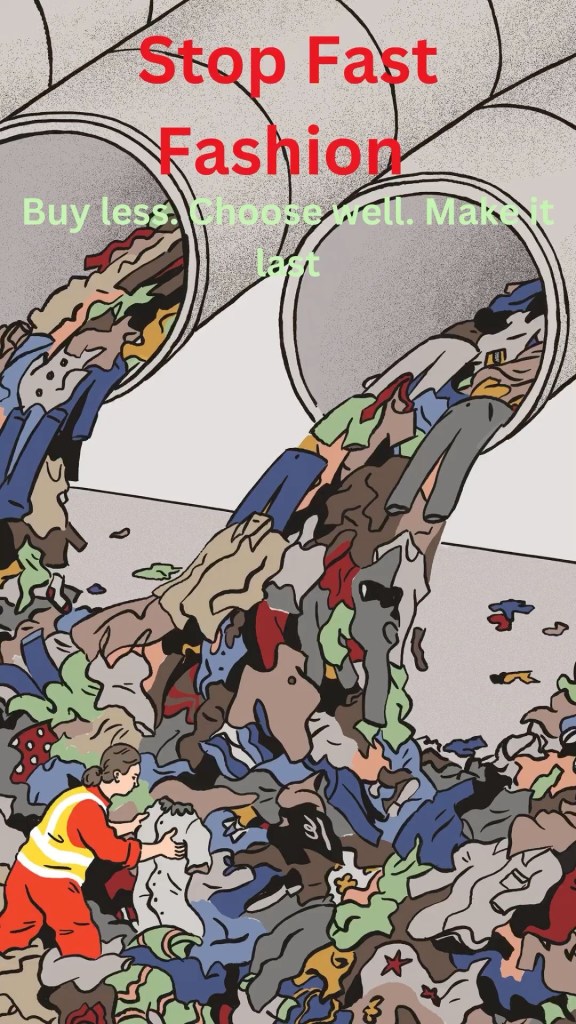
- Textile dyeing is the second-largest source of water pollution, often dumping untreated chemical-laden wastewater into rivers and seas in low-regulation regions .
3. Life After the Label: Disposal & Microplastics
Synthetic Waste
- Around 60–76% of fast fashion garments are made of polyester, nylon, or acrylic—synthetic fibers that can take centuries to degrade .
- Washing these synthetics releases as many as 700,000 microfibers per laundry load, adding up to 35% of ocean microplastic pollution .
Waste and Recycling
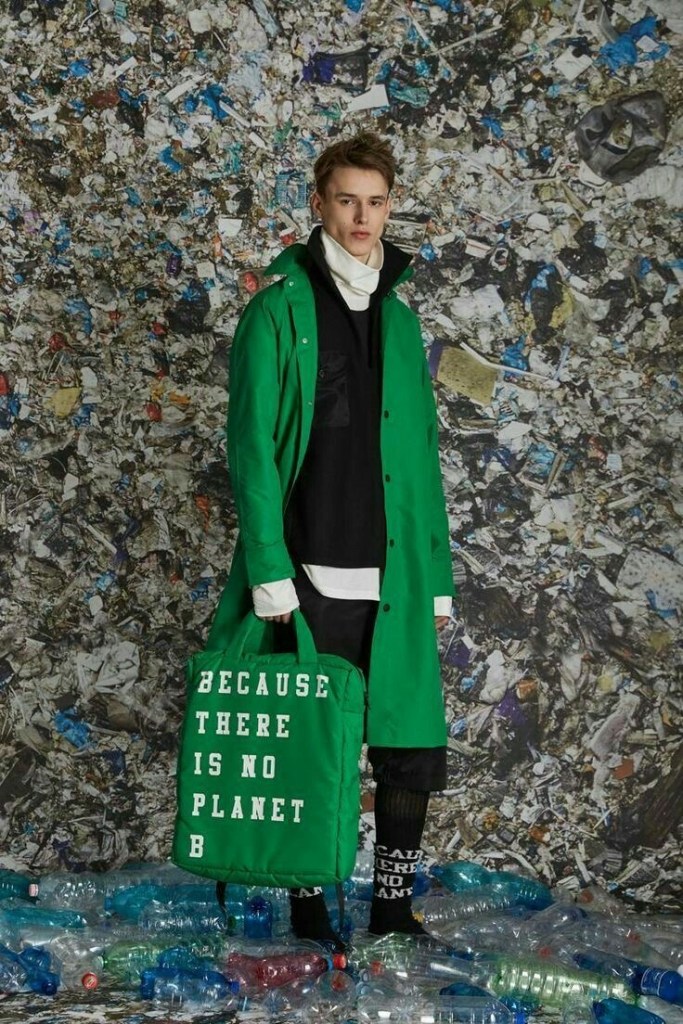
- Less than 1% of clothing is recycled into new garments. Only about 12–20% of textiles are reused or recycled globally .
- Returned or unsold fast fashion—2.6 million tonnes in the US in 2020—mostly ends up in landfill due to low resale value .
4. Global Dumping Grounds: Real-World Consequences
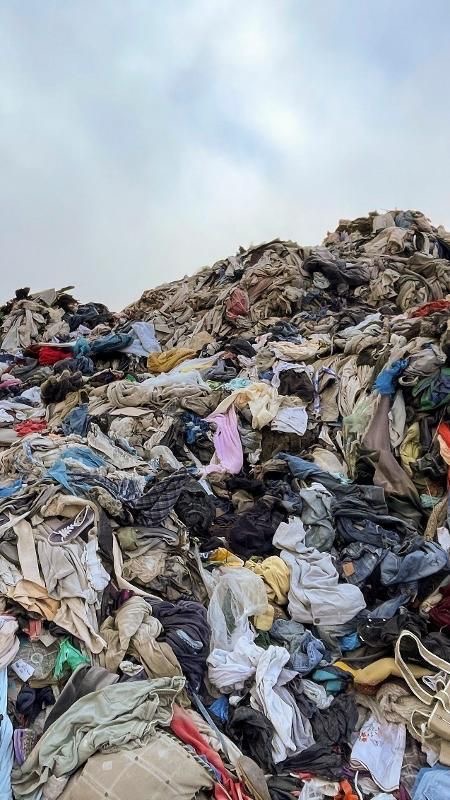
- In Chile’s Atacama Desert, around 60,000 tonnes of clothing arrive annually, with 39,000 tonnes illegally dumped—clothes still tagged from big brands like Zara, H&M, Levi’s; they pollute soil and air, and are visible from space .
- Donations are rarely a solution—only 10–30% of donated garments are resold; most are shipped abroad, overwhelming local systems in countries like Ghana .
5. What Makes It Worse? Fast Fashion’s Toxic Loop
- Fast fashion shortens garment lifespan—from 7–10 wears, a drop of ~36% over 15 years . That encourages reckless disposal.
- Trend cycles driven by social media and influencer culture fuel overproduction and consumption; designers replicate looks in weeks, speeding up the pollution cycle .
6. Why Designers Suffer Too
- Creativity is sidelined as mega-brands mass-produce lookalikes—stifling independent voices in fashion.
- Designers and artisans can’t compete with factories focused on ultra-fast turnarounds rather than craft and longevity.
7. Solutions Start With Us
What you can do:
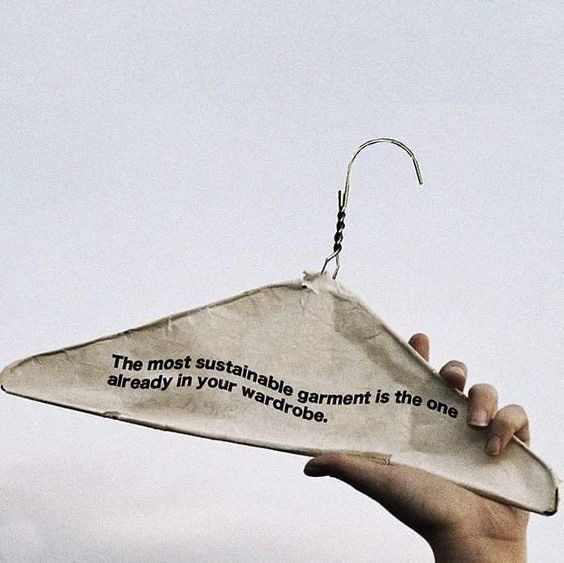
- Choose fewer items, invest in quality, and wear them longer.
- Support secondhand, thrift, swap, and upcycling communities.
- Use microfiber-capturing laundry accessories to reduce pollution.
What systemic change looks like:
- Demand transparency and extended producer responsibility in legislation.
- Slow fashion systems: zero-waste design, regenerative textiles, and rental/re-sell models like Reformation, Kotn, and Tulerie .
💡 Final Thoughts
Every discarded t-shirt, every dyed river, every microplastic-filled ocean current tells the same story: fast fashion isn’t just cheap—it’s dirty. Beyond social media trends, the true cost is paid in carbon emissions, polluted water, and wasted land. It’s time for fashion to be creative, sustainable, and responsible.
References
- Maiti, R. M. (2025, January 20). Fast Fashion: Its Detrimental Effect on the Environment. Earth.Org
- Mulhern, O. (2020, December 2). Impacts of Fast Fashion on the Environment. Earth.Org
- Earth.Org. (2021). 10 Concerning Fast Fashion Waste Statistics. Earth.Org
- Earth.Org. (n.d.). The Environmental Impact of Fast Fashion – Explained. Earth.Org
- Earth.Org. (n.d.). Fast Fashion and Climate Change: What’s the Link? Earth.Org
- Earth.Org. (2023). Microplastic Pollution Linked to Synthetic Fast Fashion. Earth.Org
- Earth.Org. (n.d.). Fast Fashion Pollution and Climate Change. Earth.Org
- Earth.Org. (n.d.). Throwaway Culture Is Drowning Us in Waste. Earth.Org
- Environmental impact of fashion. (2025, July). In Wikipedia.
- Fast fashion. (2025, July). In Wikipedia.

 Zrvkwr
Leave a comment